














Moondream · Made-to-measure guide
Curtains made to fit your space
Take your measurements, choose your heading and decide how many panels you need for your installation.
1. Measure the length of your curtain rod
You measure. We take care of the rest.
We automatically calculate the fabric needed for beautiful folds, based on your chosen heading.
Install your curtain rod or track before you start. For the best result, fit the rod at least 15 cm (approx. 5.91 in) above the window, extending 20 cm (approx. 7.87 in) beyond each side. Measure its length, excluding decorative finials.
Enter ONLY this measurement: we calculate the fabric needed for the folds based on your chosen heading and number of panels.
- For eyelets, pencil pleats and rod pockets, the flat width will be greater than the length of rod to cover, allowing the fabric to form even folds.
- For pinch pleats, which are sewn in place, the finished curtain width is measured from the first pleat (first hook) to the last pleat (last hook).
- For a lining: enter the desired flat width of the lining directly. Choose a lining width slightly narrower than your curtain.
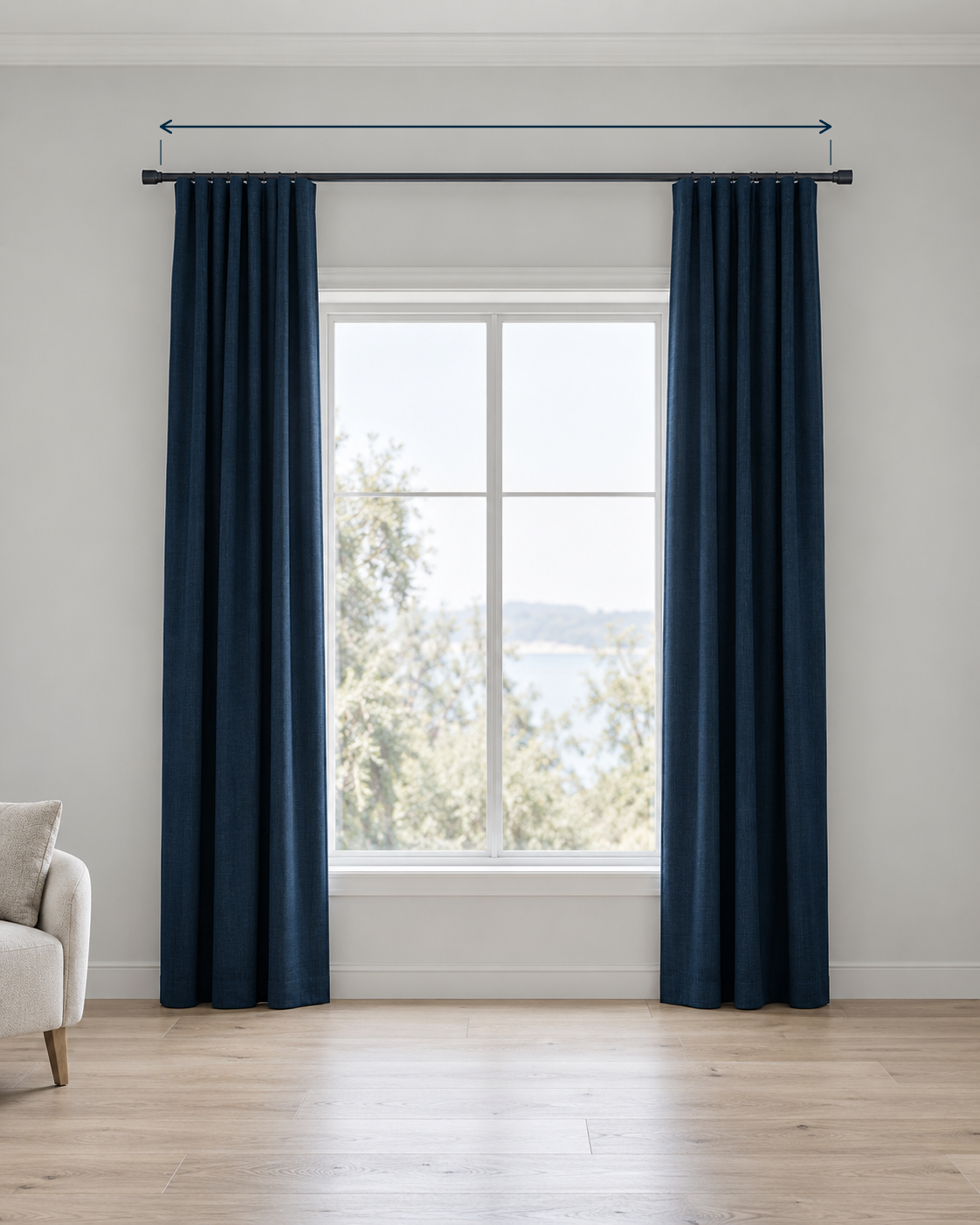
Curtain rod length (excluding decorative finials)
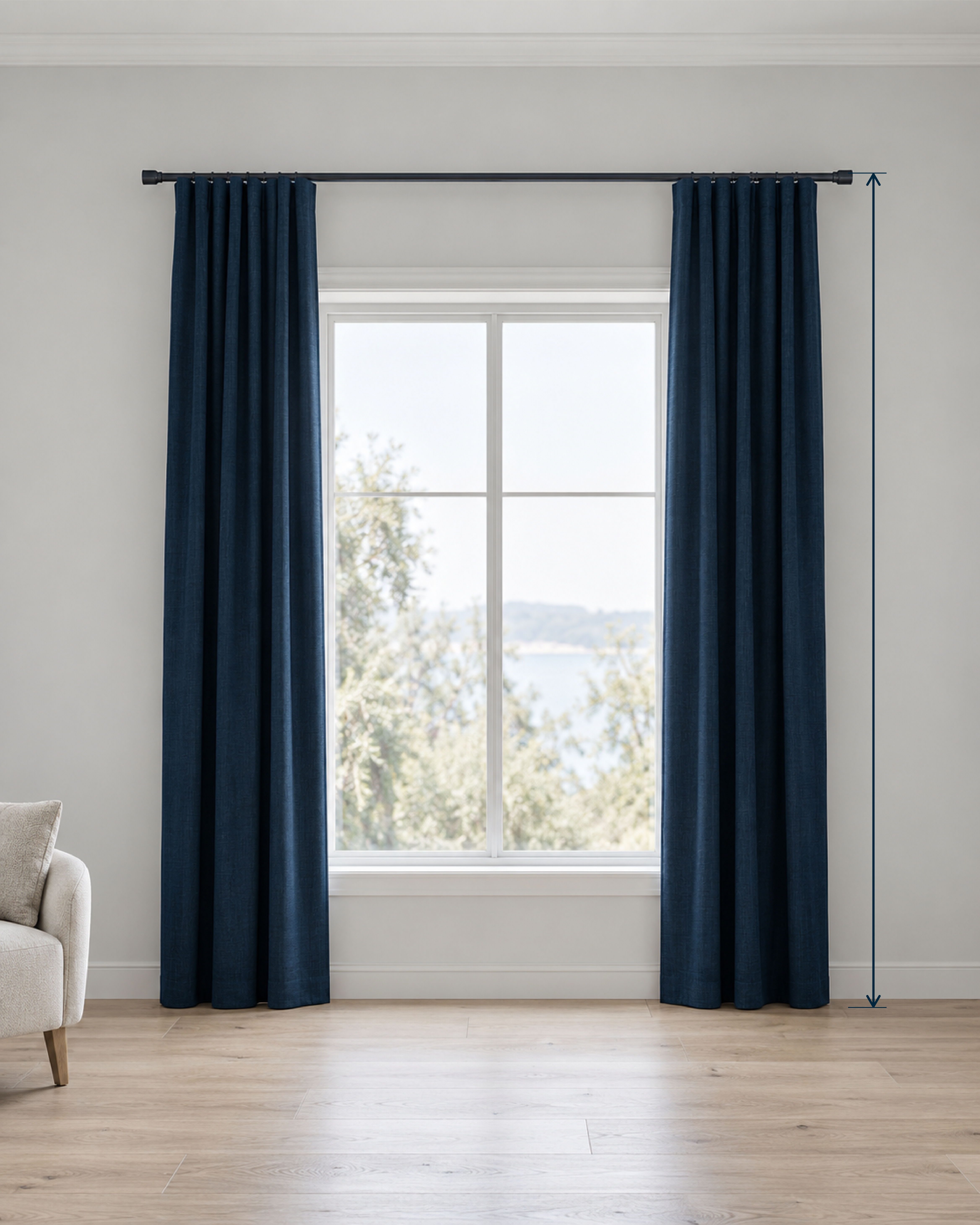
Height from the curtain rod to the floor
2. Measure your curtain height
The height you enter is the total height of the product, from its top edge to its bottom edge.
Make sure the curtain fully covers the window or opening.
For a curtain
Measure from the top of the rod or track to the point where you want the curtain to end.
For a eyelet heading, add 2.5 cm (approx. 0.98 in) for the fabric above the eyelet. This also applies to a room divider curtain with a rod pocket heading.
For a lining
Place your tape measure just below the upper section used to hang the curtain from the rod or track (the curtain heading).
Measure down to the bottom of the curtain. Choose a lining height slightly shorter than this measurement so that it stays discreet and does not show below the curtain.
How should your curtains meet the floor?
Allow for your chosen drop when entering the height for your order. Choose from three looks:
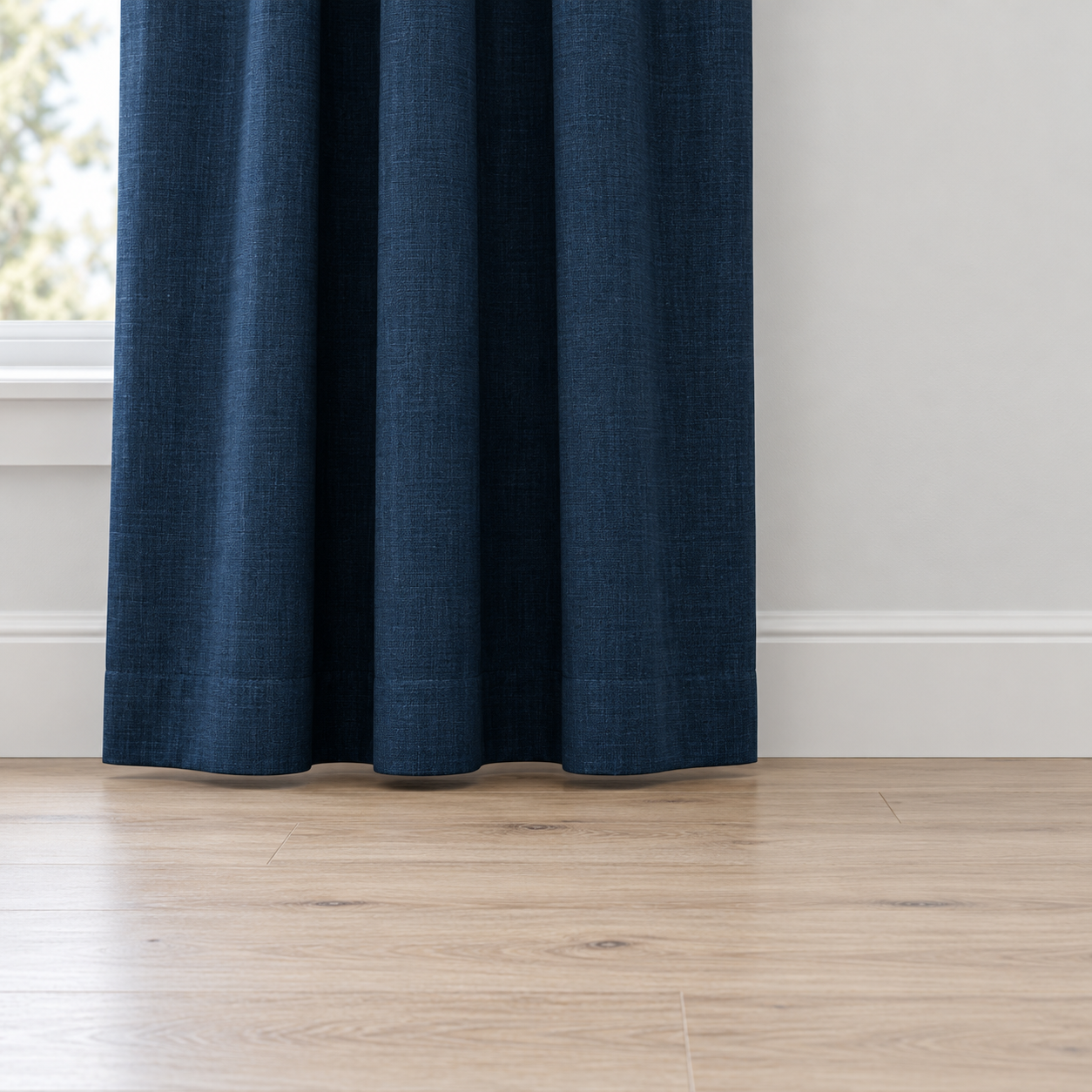
Hovering
The curtain ends 1 to 2 cm (approx. 0.39–0.79 in) above the floor. Practical for everyday use, it limits contact with dust.
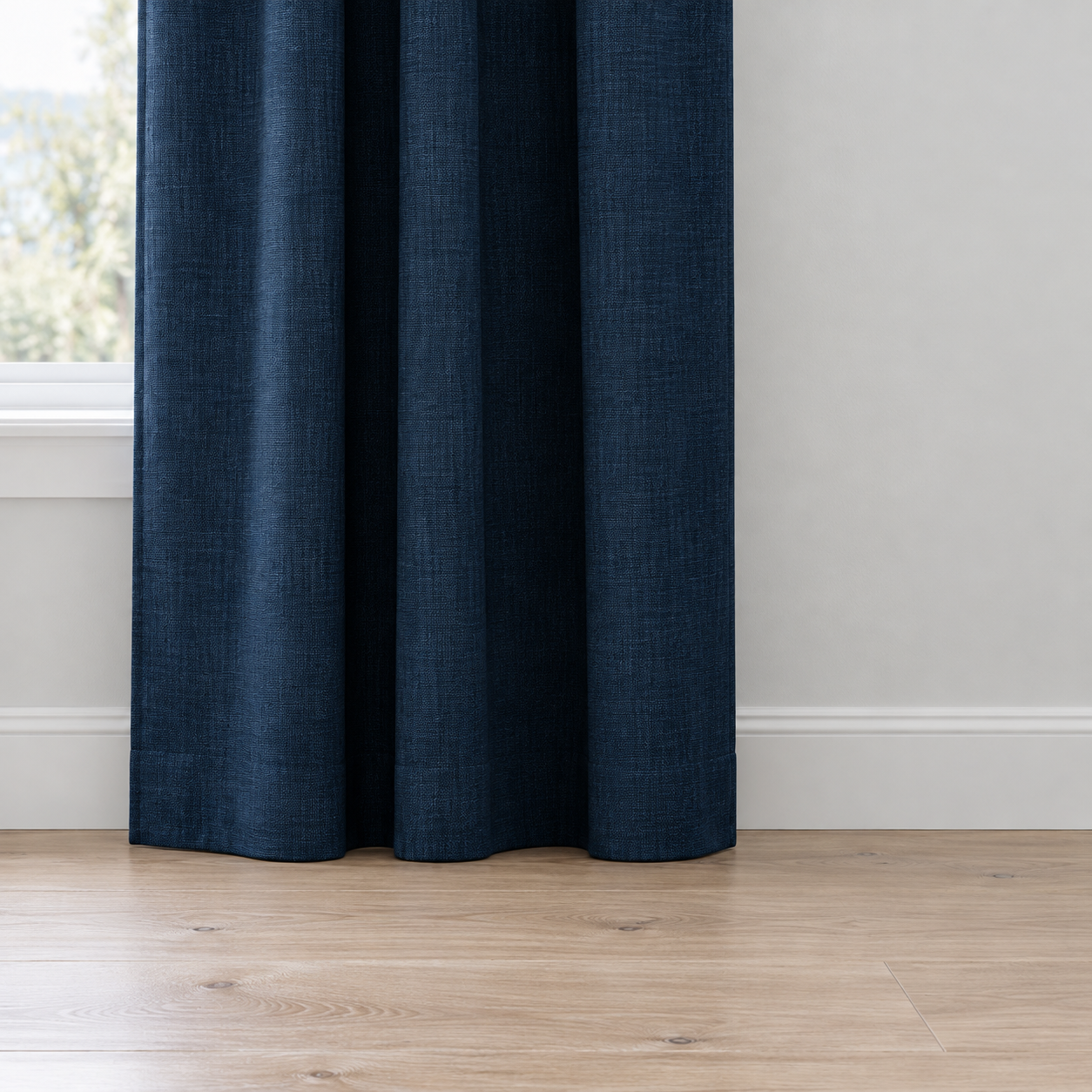
Brushing
The curtain just brushes the floor for a tailored, elegant look. It hangs straight without pooling on the floor.
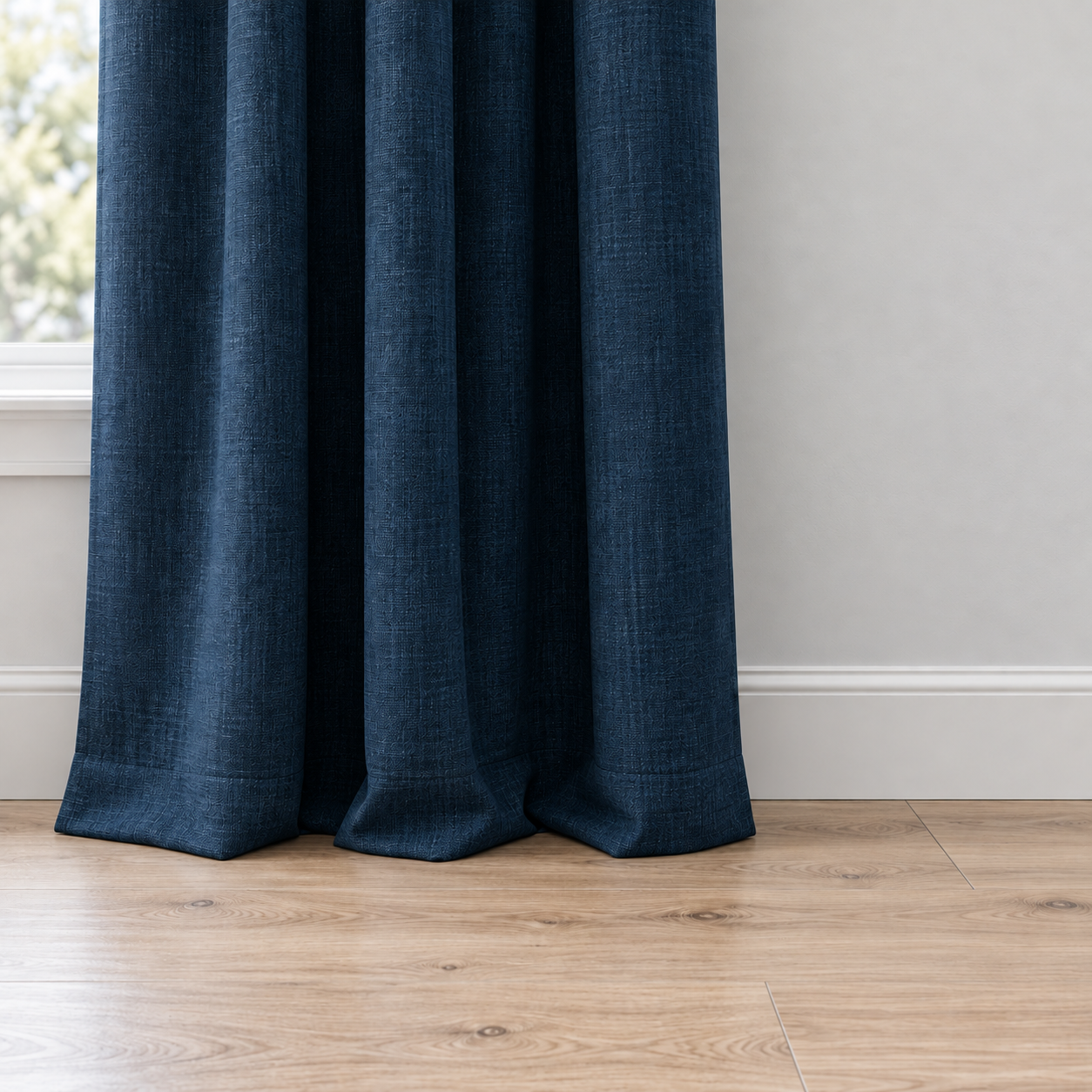
Light puddling
The curtain rests lightly on the floor. Allow up to 5 cm (approx. 1.97 in) of extra length to achieve this effect.
3. Special dimensions and heading requirements
What is the maximum curtain rod length I can enter?
For technical manufacturing reasons, the maximum accepted length depends on the heading you choose:
| Heading | Maximum length |
|---|---|
| Eyelets | 300 cm (approx. 118.11 in) |
| Pencil pleat | 250 cm (approx. 98.43 in) |
| Rod pocket | 200 cm (approx. 78.74 in) |
| Single or double pinch pleat | 300 cm (approx. 118.11 in) |
These limits apply to the curtain rod length, not the curtain’s flat width.
For hook-on linings, the flat width is limited to 500 cm (approx. 196.85 in).
My curtain rod exceeds the maximum length. What should I do?
You can cover your rod with two curtains instead of one very large curtain.
For example, for a 400 cm (approx. 157.48 in) rod with a eyelet heading, which has a limit of 300 cm (approx. 118.11 in):
- Divide your curtain rod length by 2.
- Enter 200 cm (approx. 78.74 in) (instead of 400 cm (approx. 157.48 in)).
- Select “1 panel”.
- Add the curtain to your basket.
- Change the quantity to 2.
You will receive two curtains, each designed to cover 200 cm (approx. 78.74 in) of rod. With a eyelet heading, each curtain will measure 300 cm (approx. 118.11 in) wide when flat, allowing the fabric to form folds.
Together, the two curtains will cover your 400 cm (approx. 157.48 in) rod.
How do I order a pencil pleat curtain without gathering?
With a pencil pleat heading, the curtain’s flat width is twice the rod length you enter. This extra fabric allows the gathers to form.
To obtain a flat curtain without gathering, enter half your curtain rod length as an exception to the usual rule.
For example, for a 100 cm (approx. 39.37 in) rod:
- Choose the pencil pleat heading.
- Divide your curtain rod length by 2.
- Enter 50 cm (approx. 19.69 in).
- Select “1 panel”.
You will receive a curtain with a flat width of 100 cm (approx. 39.37 in), to be hung without gathering.
For acoustic performance, we recommend keeping the gathers, as they help absorb sound.
Will my made-to-measure curtain have a joining seam?
A joining seam may be needed if your curtain, when laid flat, is wider than a single width of fabric.
Each fabric width generally measures 130 to 140 cm (approx. 51.18–55.12 in), depending on the fabric. If your curtain’s flat width exceeds this, we join several widths together to make it.
We make the seam as discreet as possible. How well it is hidden in the folds depends on your chosen heading.
4. Which heading should you choose?
The heading is the top section of the curtain. It determines how the curtain is hung, the shape of its folds and its style. If you already have a rod or track, choose a compatible heading. If not, choose your preferred heading first, then a suitable hanging system.
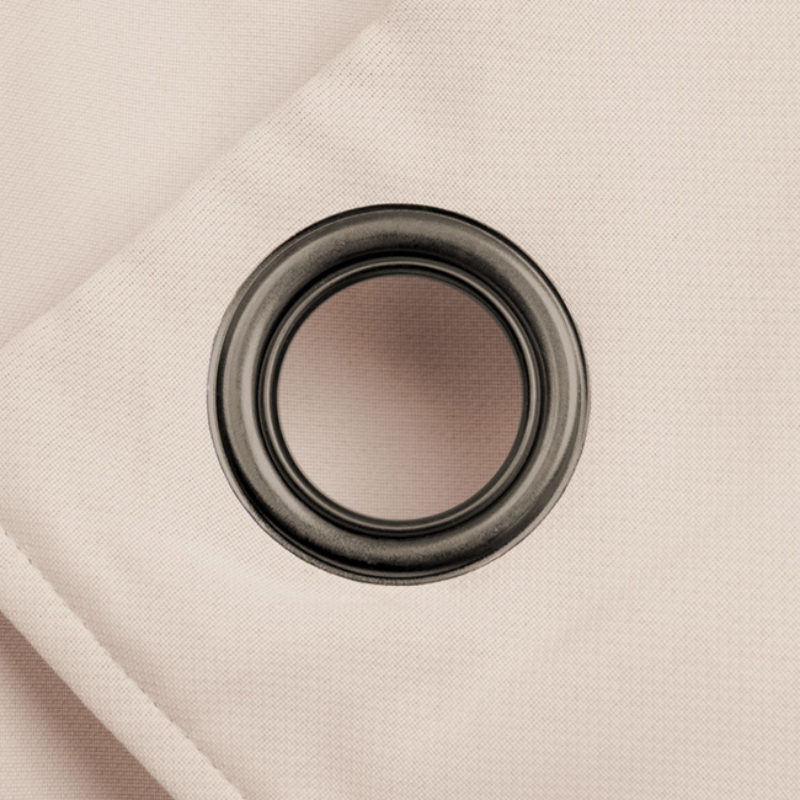
Eyelets
A contemporary look
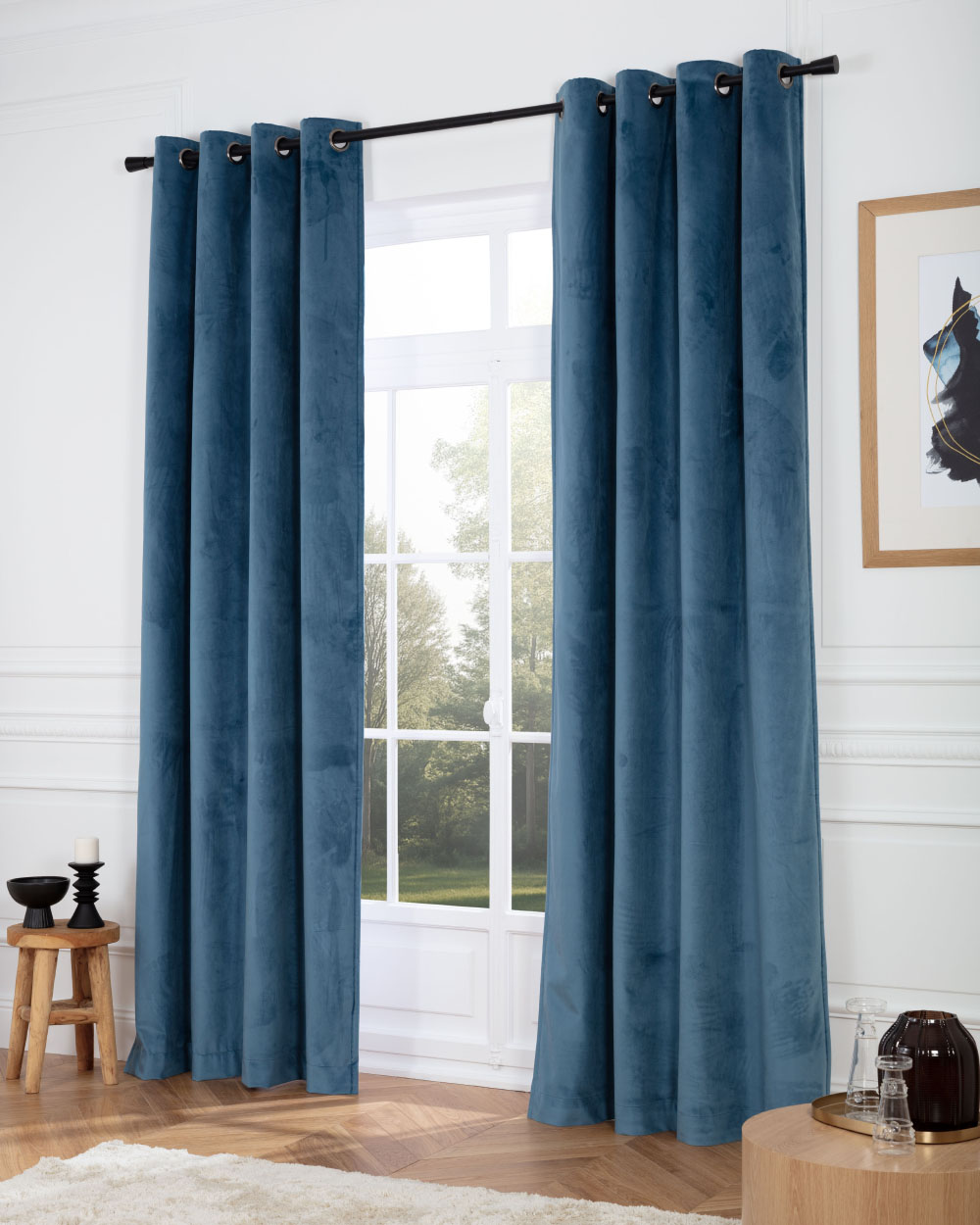
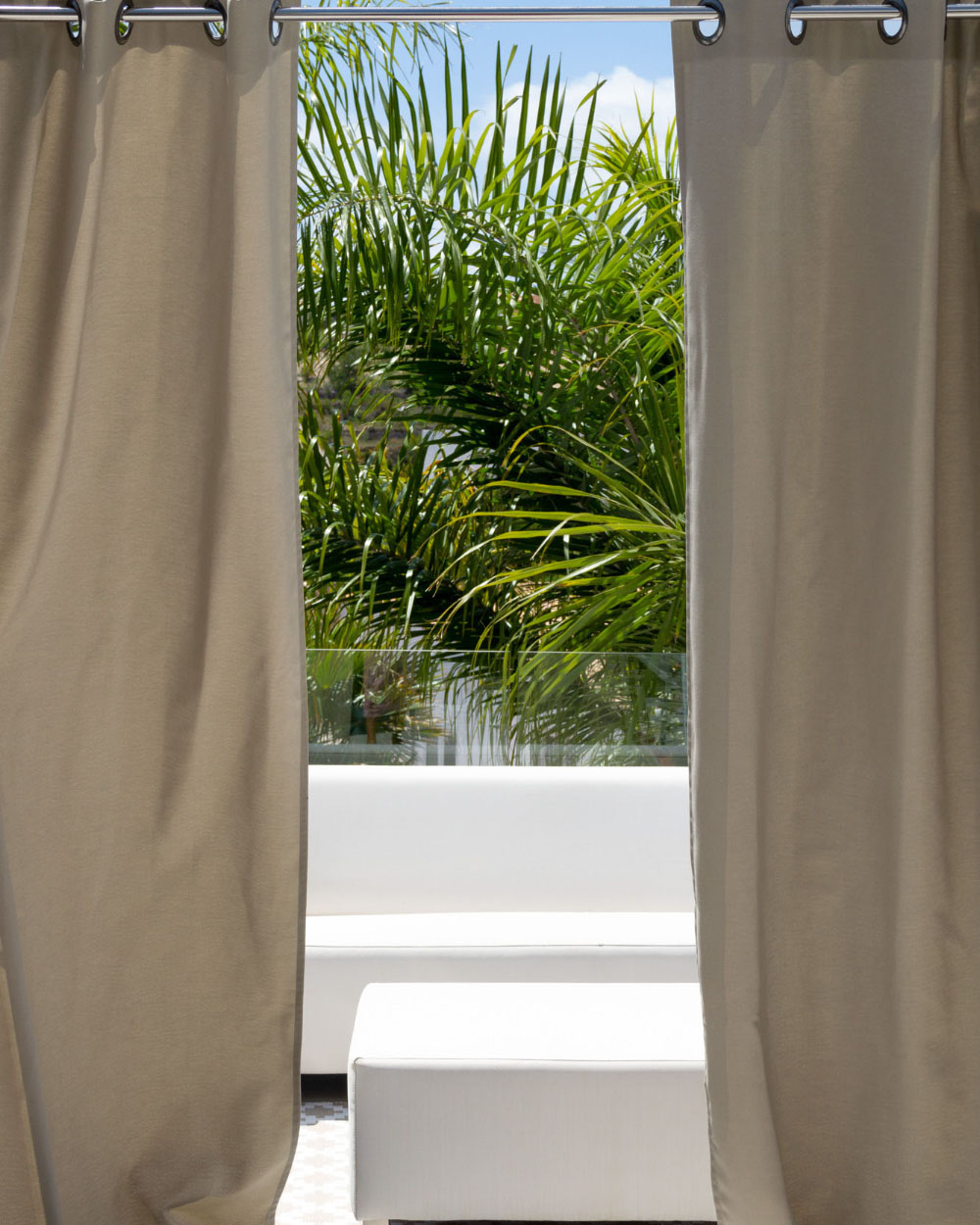
The rings built into the top of the curtain slide onto a rod and create even folds. This heading is particularly suitable for curtains you open and close frequently.
The eyelets have an internal diameter of 4 cm (approx. 1.57 in). Choose a rod with a maximum diameter of 3 cm (approx. 1.18 in) so that they slide easily.
Four colours are available : matt gunmetal, matt black, matt silver and matt gold. For outdoor curtains, only matt gunmetal is available.
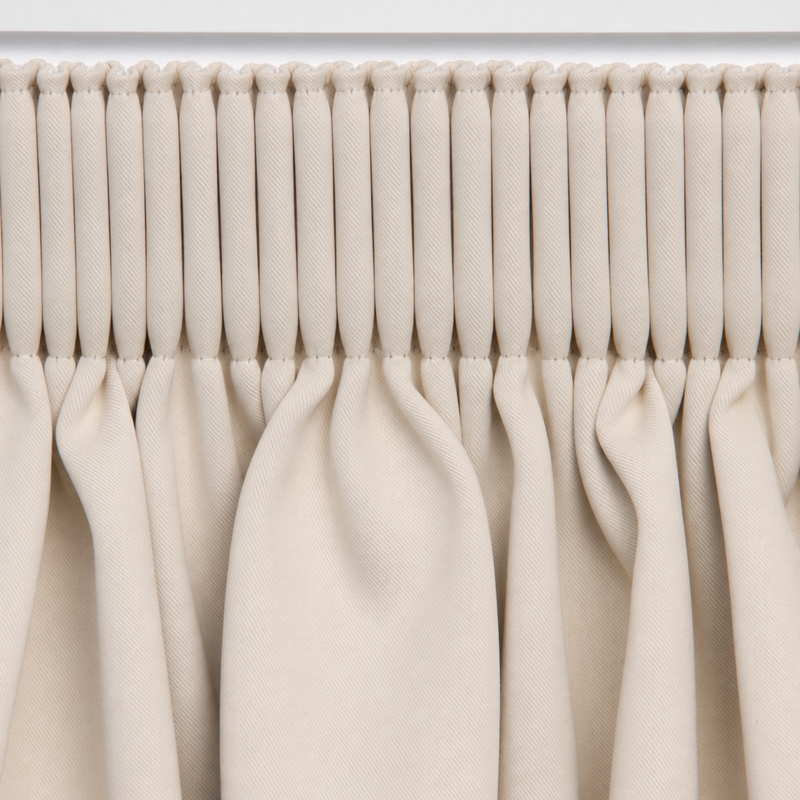
Pencil pleat
Adjustable gathers and a soft drape
Pencil pleat tape is a 7 cm (approx. 2.76 in)-high strip sewn along the top of the curtain. It creates gathers, allowing you to adjust their fullness for a more or less gathered look, according to your preference.
The reinforced heading helps the top of the curtain hold its shape and ensures a beautiful drape.
Hooks are supplied and fit into the heading tape. They make it easy to hang the curtain from a track or a rod fitted with rings.
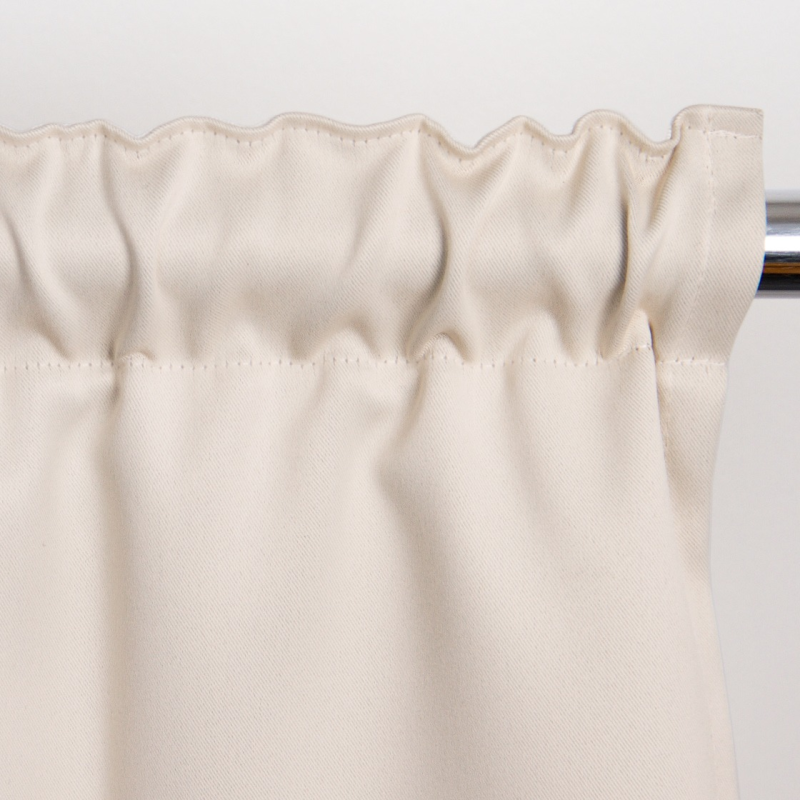
Rod pocket
A rod concealed by the fabric
The rod slides through a fabric pocket at the top of the curtain. The fabric conceals the rod and gathers to varying degrees depending on the curtain’s thickness.
The pocket opening measures 3 cm (approx. 1.18 in) : the rod diameter must therefore be strictly less than 3 cm (approx. 1.18 in).
This heading is less suitable for frequent opening and closing, and is not recommended for wide or heavy curtains, particularly soundproof models.
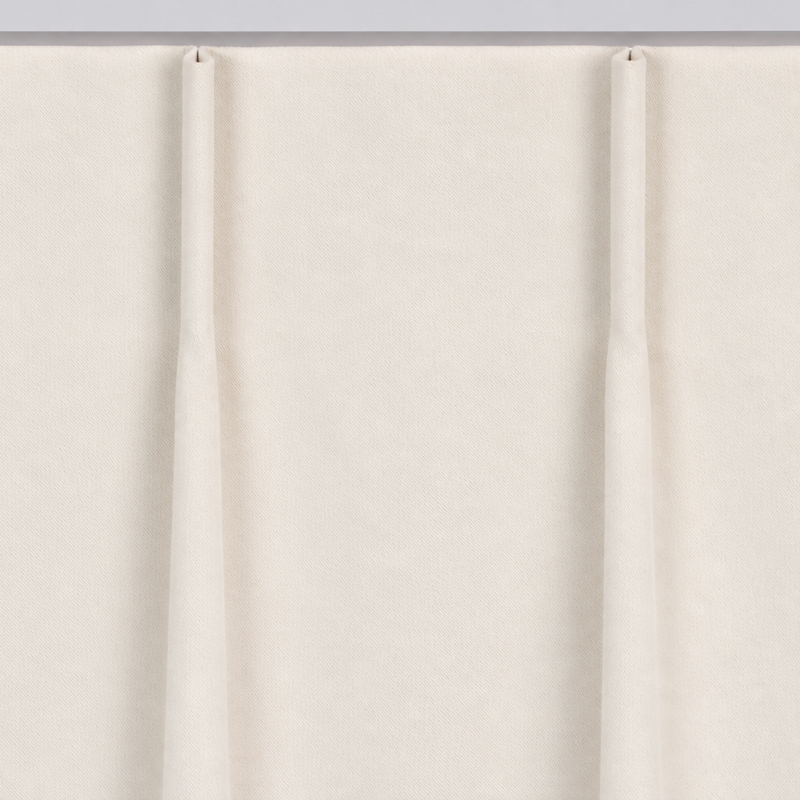
Single pinch pleat
An even, structured drape
Single pleats are sewn at regular intervals along the top of the curtain. Unlike pencil pleats, these pleats are already formed.
This heading creates an understated, elegant look. Microflex hooks are fitted and sewn into the curtain for hanging on a track. The hooks are height-adjustable.
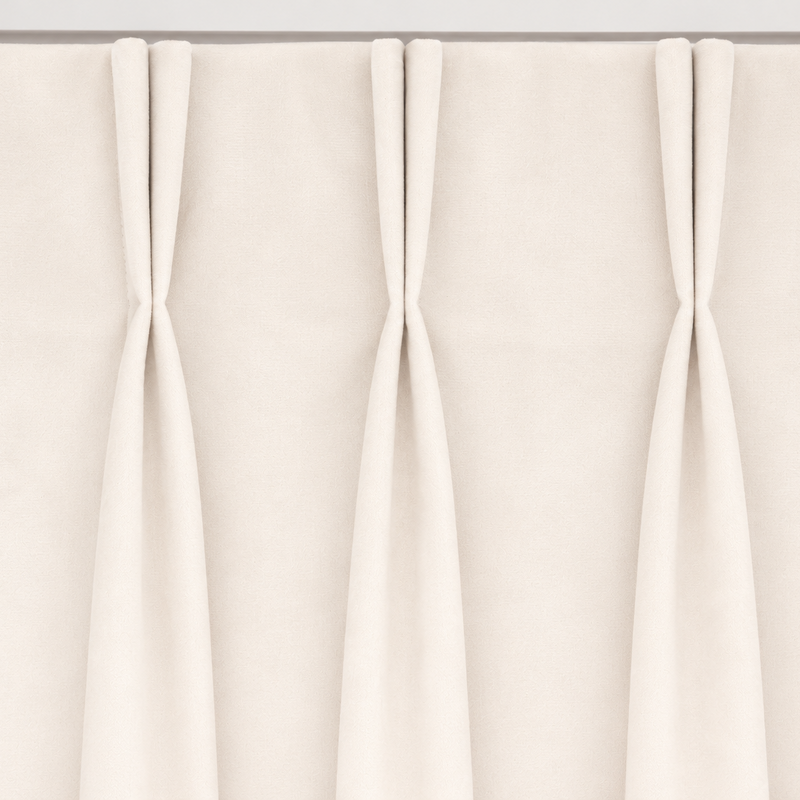
Double pinch pleat
More defined pleats
This variation features pre-formed double pleats at regular intervals, creating a more tailored look and added fullness at the curtain heading.
Microflex hooks are fitted and sewn into the curtain for hanging on a track. The hooks are height-adjustable.
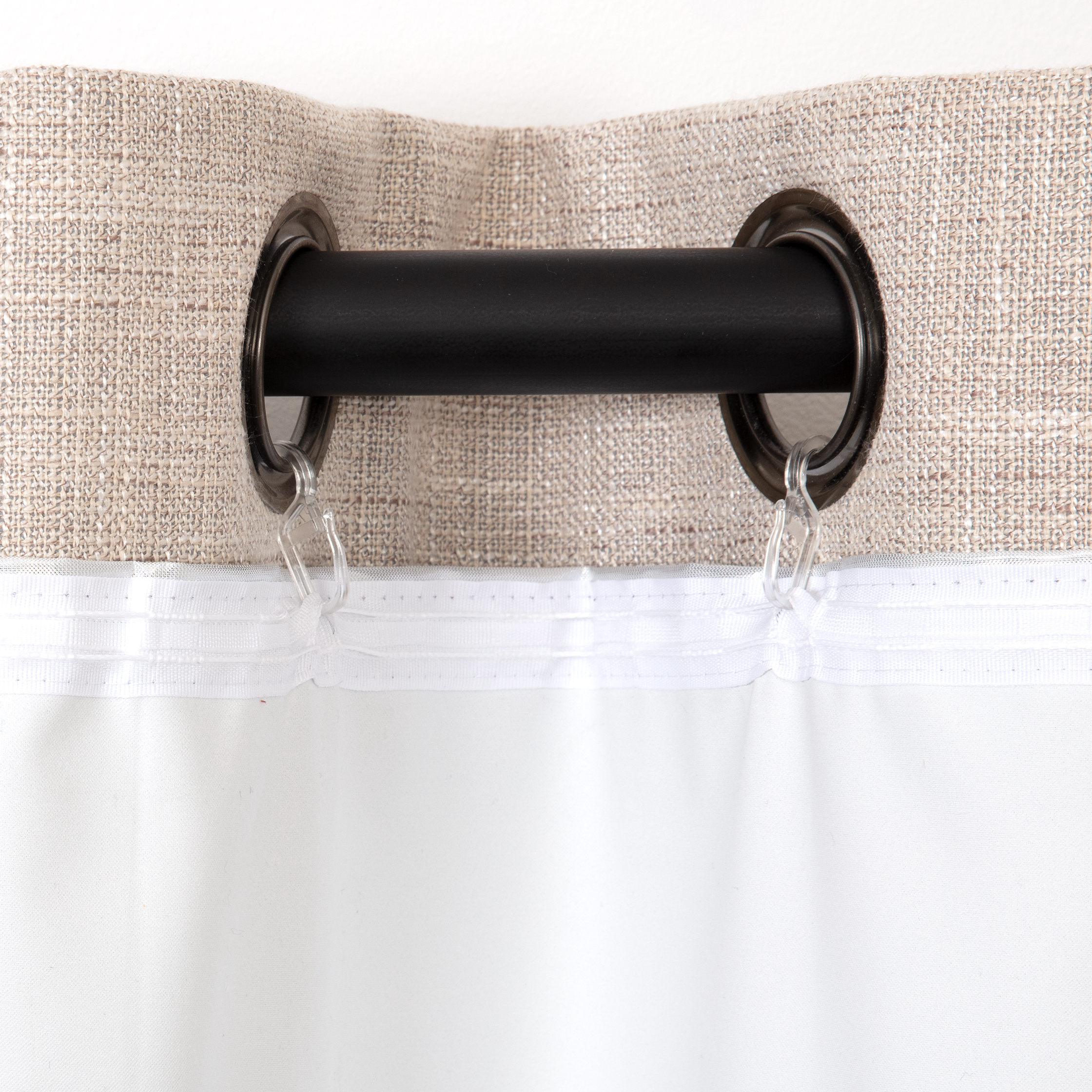
Hooks
For adding a lining to an existing curtain
This attachment option is exclusively for linings.
The hooks attach the lining to your curtain. Enjoy its benefits while keeping your existing installation, with no sewing required.
The transparent hooks remain discreet once fitted.
Which hanging system do you need?
Curtain rods and tracks are neither supplied nor sold on our website. Choose a system that can support the total weight of your curtains, especially soundproof models and large sizes, and secure it firmly to the wall or ceiling. Avoid no-drill tension rods.
Where possible, position the rod at least 15 cm (approx. 5.91 in) above the window, extending approximately 20 cm (approx. 7.87 in) beyond each side. Wider installations may require extra brackets: position them so that the curtain can open and close as intended.
5. One panel or two?
One panel means one curtain. You can choose a single curtain to cover the full length of your rod, or two curtains that cover it together.
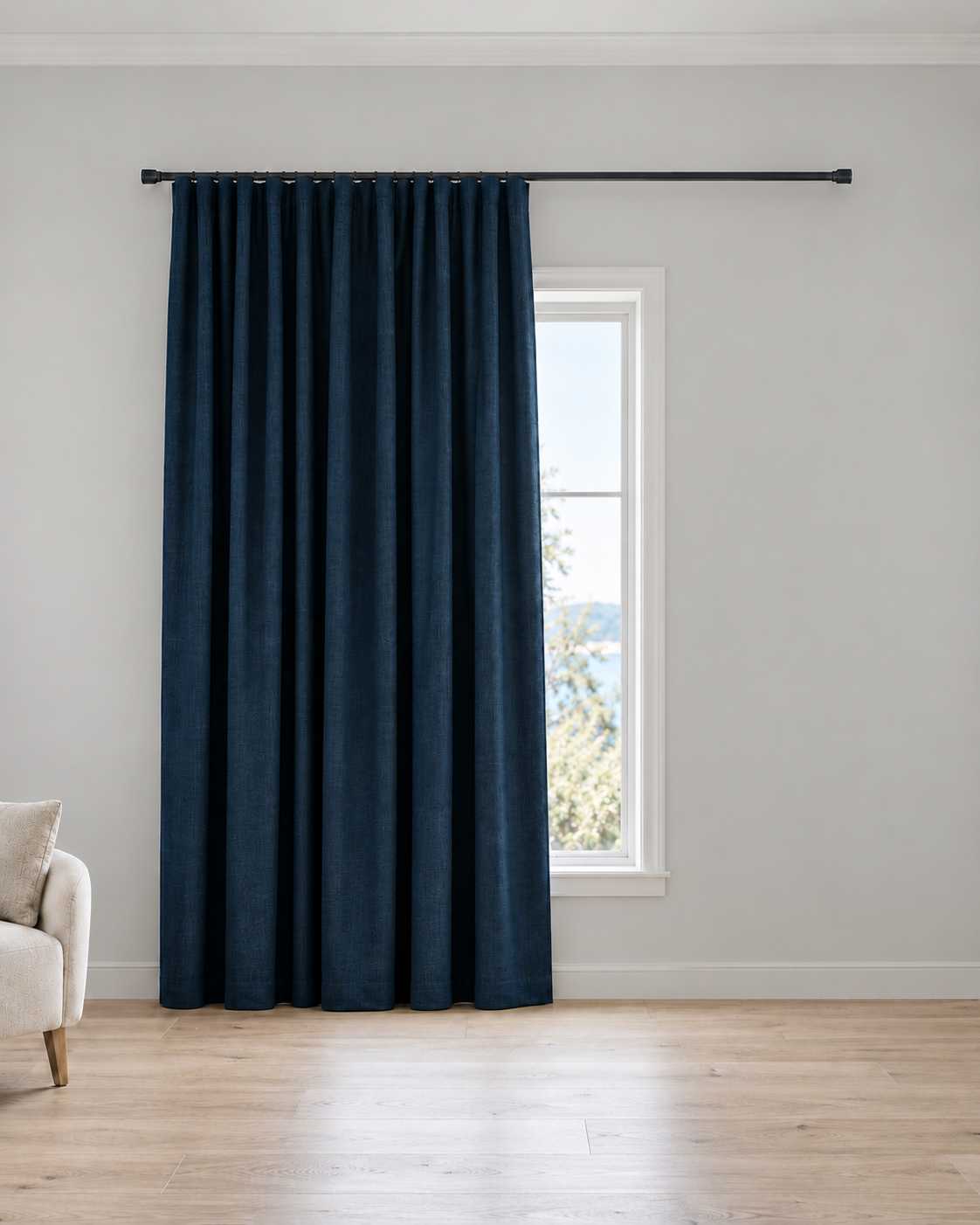
One panel
The curtain draws to the left or right. This arrangement suits shorter rods or windows in a corner, where most of the available space is on one side.
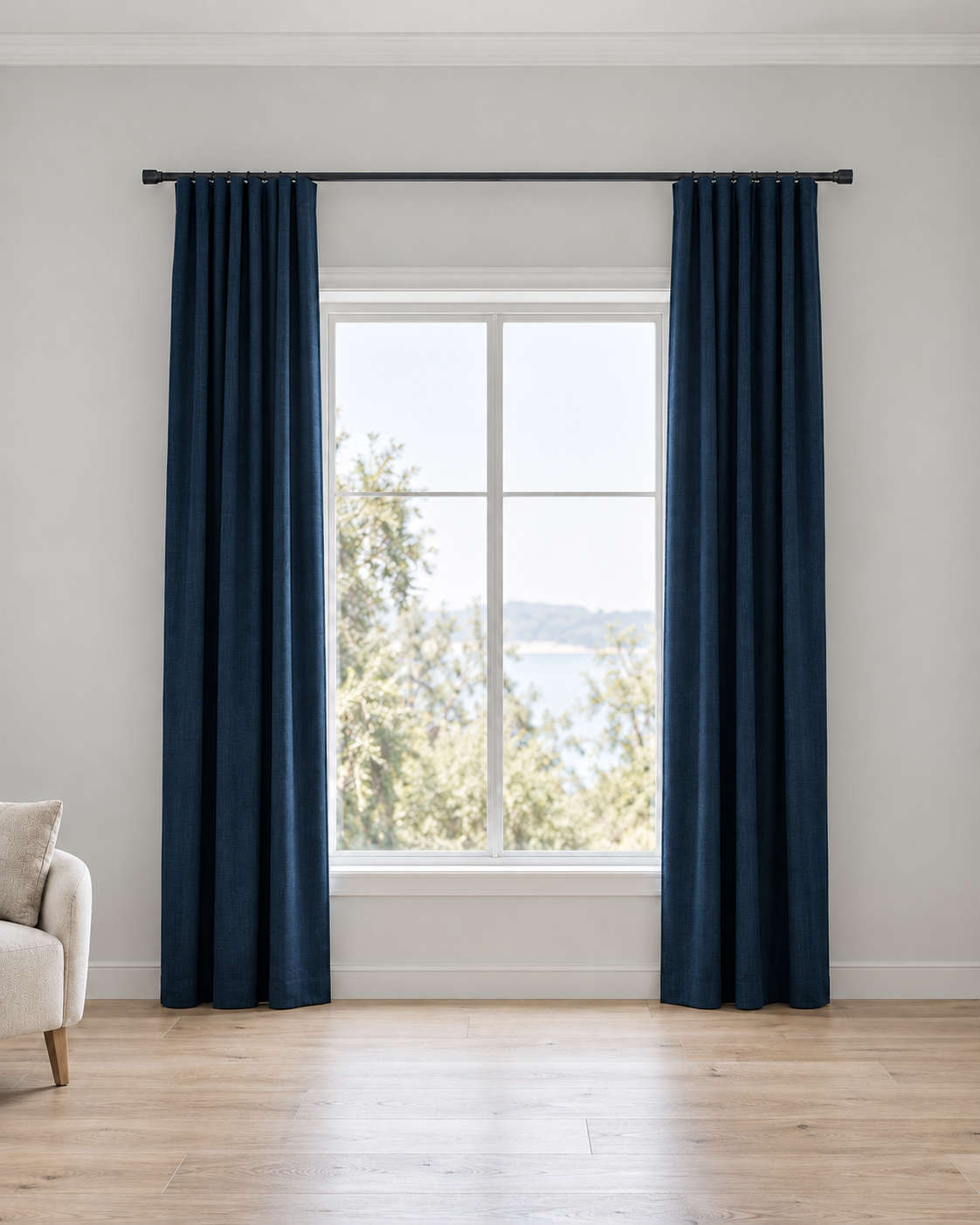
Two panels
The curtains meet in the centre and draw back to either side of the window. This arrangement suits longer rods and creates a symmetrical look, provided there is space on both sides.
For soundproof curtains, we recommend two panels when the rod length exceeds 150 cm (approx. 59.06 in), to make them easier to open and close.
How wide will each curtain panel be?
In either case, enter the full length of your curtain rod, without dividing it or adding extra width. We calculate the flat width of each curtain based on your chosen heading and number of panels.
Example for a 100 cm (approx. 39.37 in) curtain rod:
| Heading | If you choose 1 panel | If you choose 2 panels |
|---|---|---|
| Eyelets | One curtain measuring 150 cm (approx. 59.06 in) wide when flat | Two curtains, each measuring 75 cm (approx. 29.53 in) wide when flat |
| Pencil pleat | One curtain measuring 200 cm (approx. 78.74 in) wide when flat | Two curtains, each measuring 100 cm (approx. 39.37 in) wide when flat |
| Rod pocket | One curtain measuring 120 cm (approx. 47.24 in) wide when flat | Two curtains, each measuring 60 cm (approx. 23.62 in) wide when flat |
| Single or double pinch pleat | One curtain measuring 100 cm (approx. 39.37 in) between the first and last hook | Two curtains, each measuring 50 cm (approx. 19.69 in) between the first and last hook |
For eyelet, pencil pleat and rod pocket headings, the extra width allows the folds to form. For pinch pleat headings, the pleats are already sewn in place.
Linings are available as single panels only : allow one lining for each curtain.
Discover our made-to-measure curtains


Need help with your measurements?
Contact our customer service team for help with your project.